Governess’s psychological crisis
The Turn of the ScrewThe governess’s psychological crisis is the pressure of isolation, fear, and responsibility as her alliance with Mrs. Grose dissolves and she is left alone with Miles. The crisis reaches its sharpest form in the bedroom confrontation over her stolen letter: Peter Quint appears at the window, and she tries to face the apparition without letting Miles know what she sees. The scene makes her resolve at once an act of protection and a perilous claim to certainty.
Isolation and the assumption of command
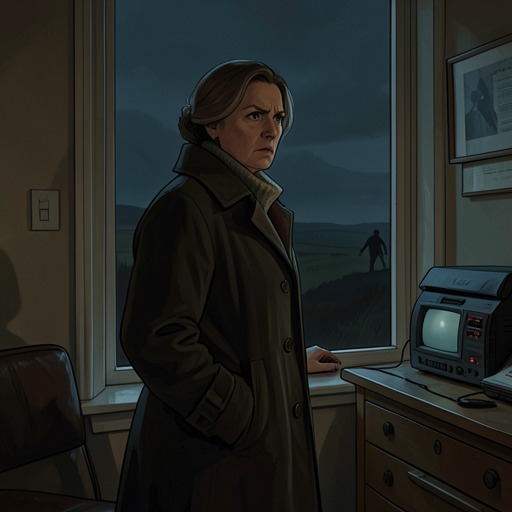
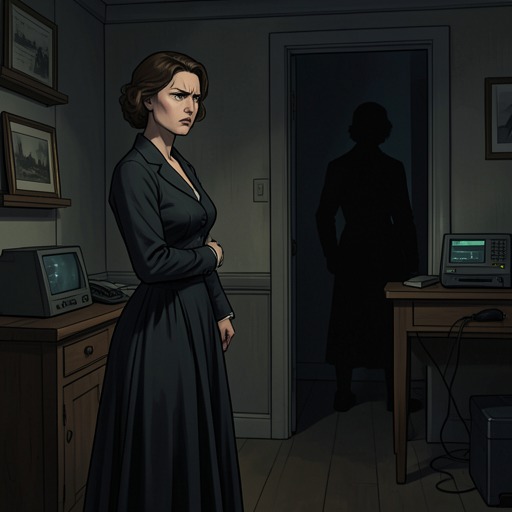
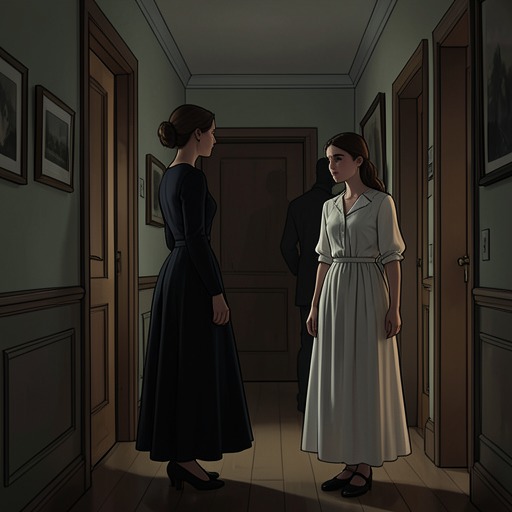
Mrs. Grose’s departure with Flora leaves the governess exposed to the task she had anticipated but not fully measured. When she comes downstairs and discovers that their carriage has already passed through the gates, she describes herself as face to face with the elements. The abruptness of the departure unsettles not only her: the household servants look blank, and their confusion aggravates her nerves. She responds by turning that visible uncertainty into a reason to take command, moving through Bly with a deliberately firm manner even while privately acknowledging her sick heart.
The performance of steadiness is both practical and defensive. The governess welcomes the sense that there is much to do and makes a point of appearing ready for any onset. She later understands that this composure had to be actively seized, like a helm, to prevent her from being overwhelmed. Her public bearing and private fear coexist; the confidence she displays does not erase the apprehension it is meant to contain.
A changed relation with Miles
The governess does not see Miles during her early rounds. His absence, and his choice to breakfast with Mrs. Grose, Flora, and two maids before going out for a stroll, mark the change in their relation after the previous day’s piano episode. That episode had allowed him to keep the governess absorbed and diverted in Flora’s interest; Flora’s confinement and departure now make the changed circumstances public. Their usual schoolroom routine has also been abandoned.
The crisis includes the governess’s recognition that she can no longer credibly claim to teach him. She sees the pretense as absurd and recalls that Miles had used small, tactful gestures to preserve her dignity while she struggled to meet him on the ground of his actual capacity. She resolves not to interfere with his newly acquired freedom. The withdrawal of her former authority offers a measure of relief, but it also leaves uncertain what her role can be now that the ordinary teacher-pupil relation has fallen away.
Fear, tenderness, and the attempted confession
When the governess later speaks with Miles, she detects a faint quiver of resentful passion beneath his gaiety. His question about whether she means to address the matter there and then seems to her the first sign she has seen of immediate fear in him. Yet the discovery does not make sternness easy: she hears herself answer gently and asks whether he wants to go out again. Miles says that he wants to very much, smiling with what she regards as heroic bravery even as pain makes him flush and he turns his hat in his hands.
That small gesture sharpens the governess’s moral uncertainty. She fears that pressing him may impose the idea of guilt and ugliness on a child she has experienced as capable of beautiful companionship. The scene does not settle whether her interpretation of Miles is sound; instead, the remembered narration places her tenderness beside her conviction that an urgent truth must be brought into the open. For a moment, both seem afraid for the other, and their mutual concern delays the confrontation.
Miles offers to tell her anything she wants to know, but not yet. His promise appears to open a way toward disclosure while also postponing it. The governess’s crisis thus turns on a contradiction: she longs for the truth, yet she is conscious that forcing it from Miles may harm the very person she hopes to protect.
The window and the struggle to protect Miles
The confrontation over the letter brings that contradiction into a decisive scene. As the governess asks whether Miles took her letter from the hall table the previous afternoon, her attention splits. She springs up, draws him close, and instinctively keeps his back to the window. Peter Quint has appeared outside, close to the glass, his white face fixed on the room. The governess recognizes the apparition and understands that Miles has not yet become aware of it.
Her response is not simply to challenge Quint. In the shock of seeing him, she decides that her immediate task is to keep the boy unaware of what stands beyond the pane. She experiences this choice as a struggle for a human soul and holds Miles at arm’s length, feeling the sweat on his forehead. Then Miles answers her question plainly: he took the letter. The confession brings her joy and relief, and she enfolds him against her breast, feeling the fever in his small body and the force of his heartbeat while keeping her eyes on Quint.
The apparition shifts its posture, seeming first like a sentinel and then like a baffled beast prowling outside the window. The governess believes Miles remains unconscious of its presence and draws courage from that belief; she continues questioning him while the face watches from the glass. The scene therefore joins her most forceful assertion of control to the vulnerability of her position: she must attend to Miles’s confession, restrain her own terror, and maintain her watch on a figure whose reality is presented through her perception.
Narrative significance and unresolved strain
The crisis is narrated retrospectively by the governess, whose account gives close access to her fear and resolve without independently confirming how others would interpret the apparition. Her language turns ordinary actions—walking through the house, meeting Miles, holding him—into tests of command and perception. The window concentrates that tension: Miles is turned away from it, while the governess keeps looking outward, placing herself between the child and what she believes threatens him.
Her apparent recovery of composure does not amount to release from crisis. It depends on an exhausting division of attention and on the belief that she can both recognize the danger and shield Miles from it. The servant’s bewilderment, the altered household routine, her loss of a conventional teaching role, and Quint’s renewed appearance all press upon the same isolation. In the final confrontation represented here, the governess’s care is real, but so is the narrative uncertainty surrounding the vision through which she understands that care as a fight for Miles’s soul.